Application sectors
Sandblasting and bead blasting for the watchmaking sector
Sandblasting is a surface treatment technique that involves projecting abrasive particles onto a surface to clean, polish or texture it. In the watch industry, sandblasting is used for several applications, including:
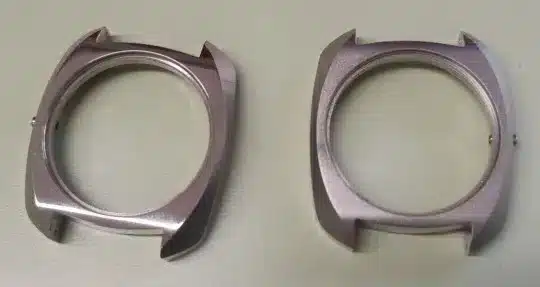
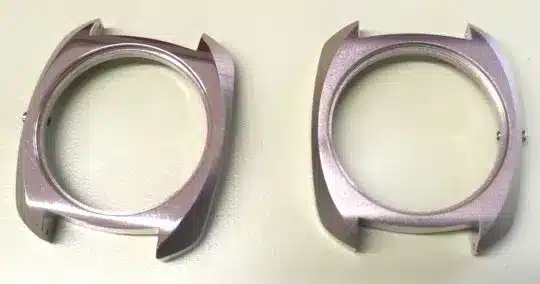
- The finishing of watch cases. Sandblasting is used to give a matte or satin finish to stainless steel or titanium watch cases. This finish is highly appreciated for its sleek, scratch-resistant appearance.
- Surface preparation before treatment. Sandblasting is used to prepare the surfaces of timepieces for further processing, such as electroplating or plating. Sandblasting cleans the surface and makes it rougher for better adhesion of the subsequent treatment.
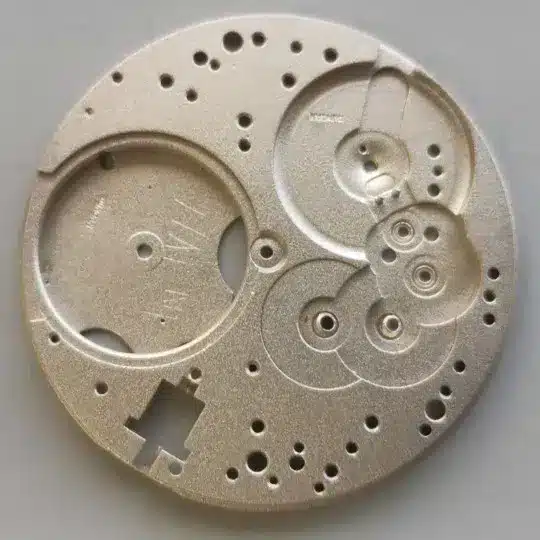
- The creation of decorative patterns. Sandblasting can be used to create decorative patterns on watch cases or dials. Patterns can be created by using stencils or by sanding the surface in a loose manner to create unique designs.
In summary, sandblasting is a very useful surface treatment technique in the watch industry for finishing watch cases, preparing surfaces before treatment and creating decorative patterns. Contact us to learn more!
Sandblasting in the industrial sector
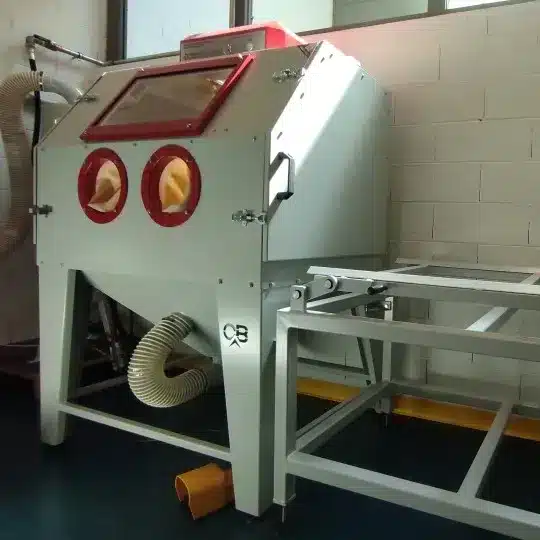
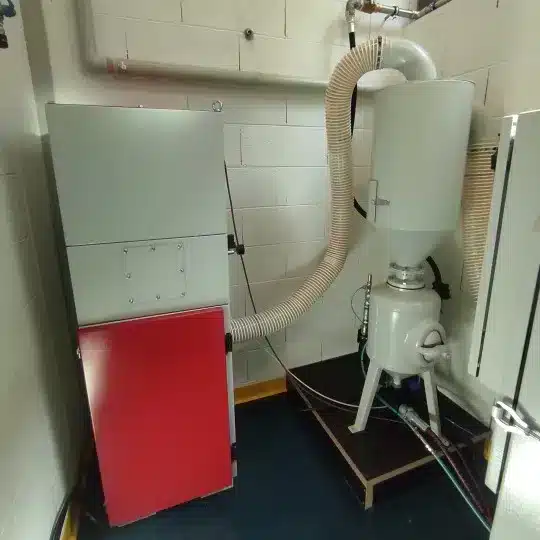
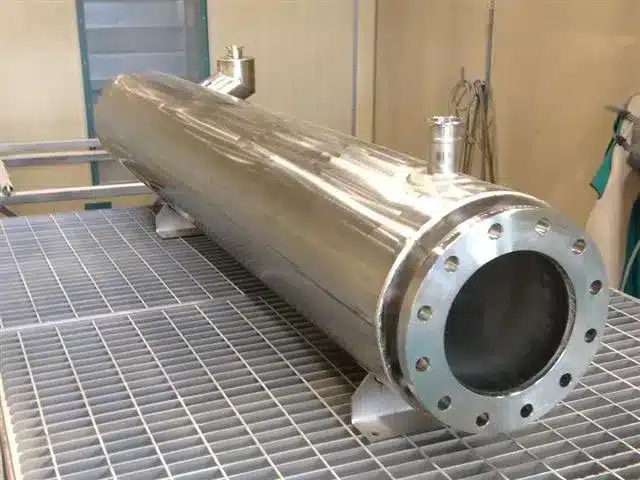
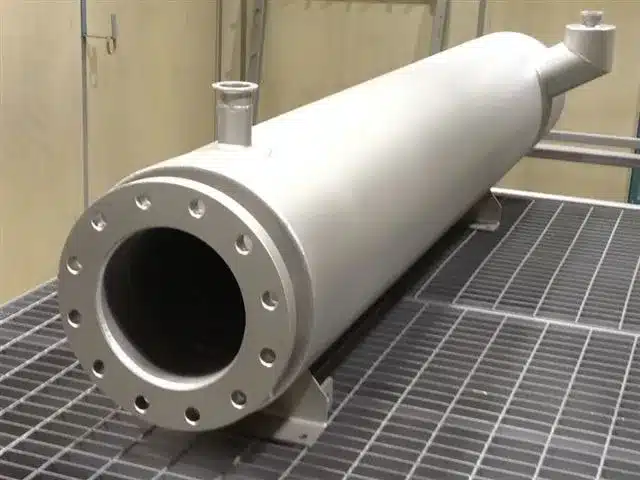
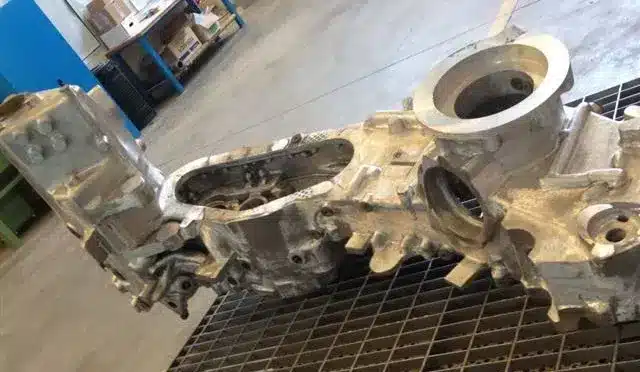
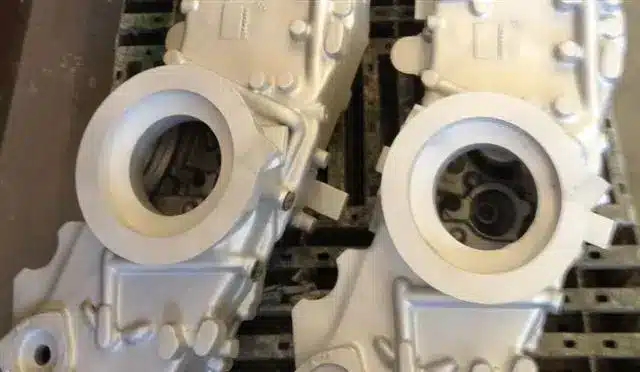
The industry uses sleeve sandblasters for countless reasons. A whole book would not be enough to describe most applications in a general way. For this reason we limit ourselves to mentioning the main applications and also showing you some photos to give you an idea.
Main industrial applications
Simple industrial maintenance
All oxidized parts can be bead-blasted to obtain a virtually new surface for recoating.
Descale, surface preparation before painting
In the pre-painting surface preparation processes, the right roughness must be guaranteed to ensure the adhesion of the paint. Sandblasting is always the best choice.
Bead blasting
To make oxidized parts look like new without scratches or material loss. The components undergo hammering on the surface that literally causes the oxides to burst without touching the healthy part that is simply crushed. This treatment gives more mechanical strength to the surface.
Shot-peening
The mechanical engineering industry, which produces metal parts subjected to high stresses, often uses shot-peening. This technique consists of hammering the surface with glass or ceramic beads in order to hammer the metal surface to prevent cracks due to stress.
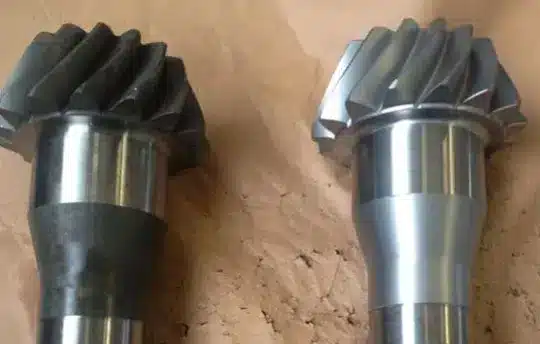
This treatment is bead blasting where the operating parameters are extremely precise. The speed of projection, the size of the balls and the angle of attack will never be the result of chance but carefully chosen. Components such as body prostheses, gearbox gears and certain aircraft parts are treated with shot-peening.
Before / After
Sandblasting in the mechanical sector
Sandblasting is used throughout the mechanical industry for a wide range of applications. It is obvious that impacting surfaces in a controlled way with different aggregates brings advantages at all levels and in all industries.
The most significant sectors concerned by sandblasting are the following:
- Automotive manufacturing (shot peening, surface preparation before painting)
- Old-Tymer (renovation of metal surfaces)
- Industrial maintenance (removal of traces of oxidation, polishing)
- Various industrial processes (oning, shot-peening, deburring, aesthetic finishing)
ABM Machines is equipped to allow you to achieve the results you want in the best possible production time, according to your specifications: contact us!

Before
After
Before
After
Sandblasting for Additive 3D Printing
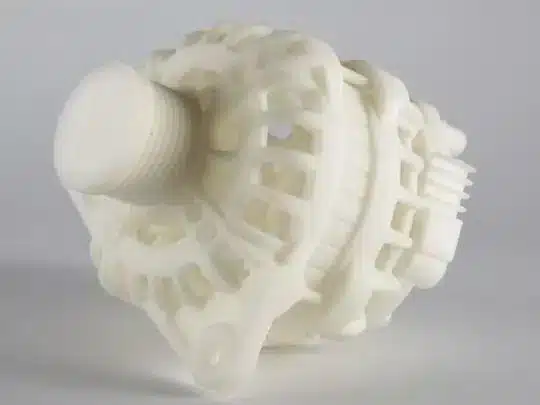
3D printing often requires perfecting the surface condition of certain parts. To obtain a surface finish that is pleasant to the eye or to the touch, the use of sandblasting is sometimes essential.
The cleaning of internal channels can be carried out by sandblasting, with the advantage of the certainty of a perfectly controlled cleaning. We also find that cleaning residual dust is extremely effective with sandblasting. The environment also makes it possible to manage dust efficiently. All this while giving the surface a roughness according to the specifications of the project. 3D printing, especially for metal parts subject to mechanical stress, requires a shot peening treatment to prevent possible damage due to the life of the part.
We provide all 3D printers with all our expertise to achieve the requested objectives: contact us for more details.